
Smart Energy Systems: a new energy supply model for Ukraine
The Smart Energy Systems concept combines electricity, heat, gas and transport into one flexible system. What it means for Ukrainian businesses and where energy storage fits in.
Read →What a PCS is in a BESS, how double conversion works and why it turns a battery from a backup into a tool for savings and stability.
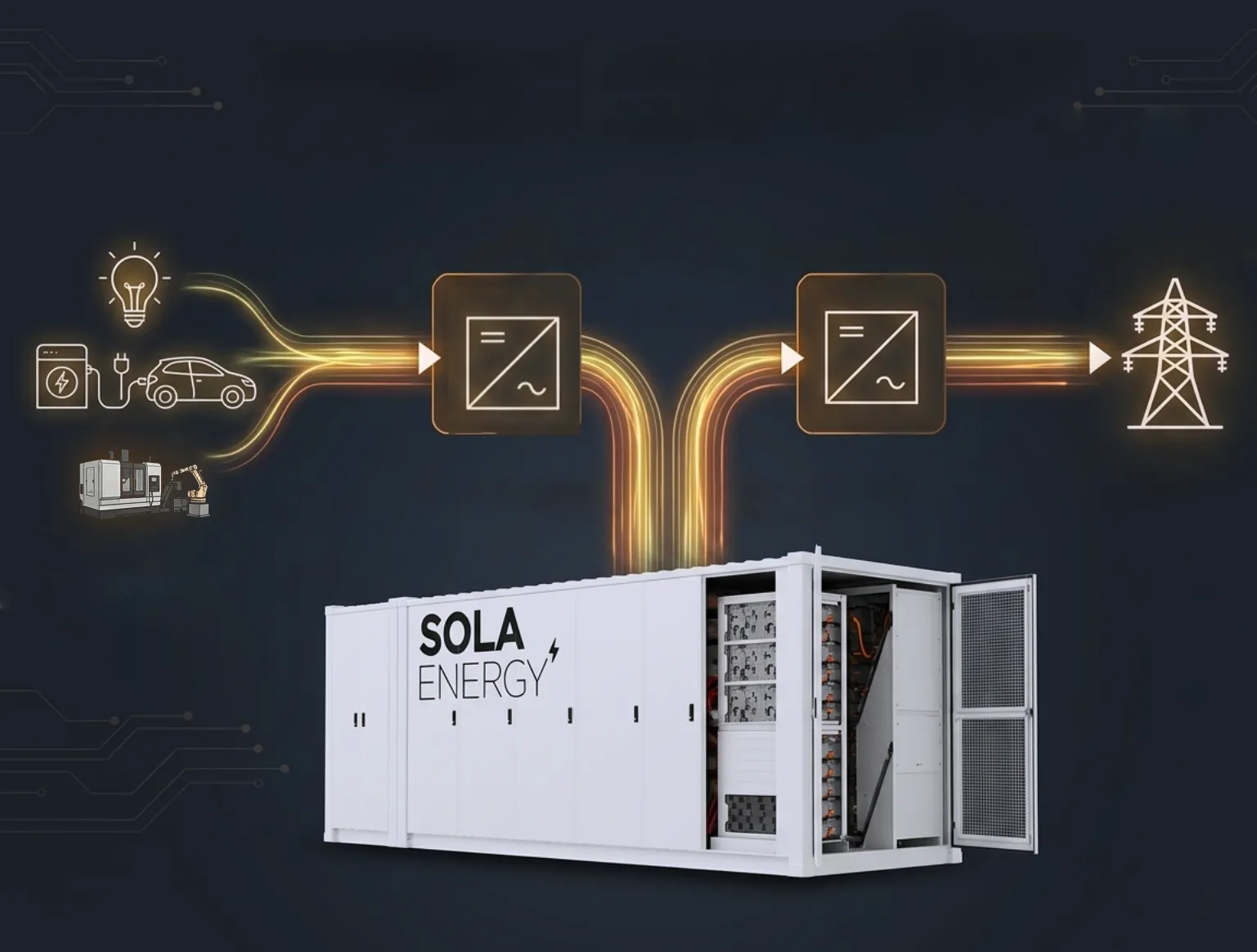
An industrial battery is less and less seen as just a backup for emergencies. In modern BESS installations it stabilises site operation, lowers energy costs and takes part in the energy market. One of the solutions that makes this possible is PCS double conversion.
The PCS (Power Conversion System) is the part of a BESS responsible for bidirectional energy conversion between the battery and the grid or AC loads. Energy stored in the batteries as DC is converted to AC, and energy from the grid charges the batteries the other way.
In a double conversion design the system is built so that the battery can supply local loads and work with the grid at the same time, without choosing one scenario.
Factories and logistics centres with large and variable loads, sites with their own solar plant, and any facility where both supply reliability and energy flexibility matter.
SOLA TITAN uses a liquid-cooled Danfoss Vacon NXP converter. The rated output voltage is 690 V; for a 400 V grid a Δ/Y isolation transformer to EN 60076-11 is used. We agree the equipment scope and connection scheme at the design stage.
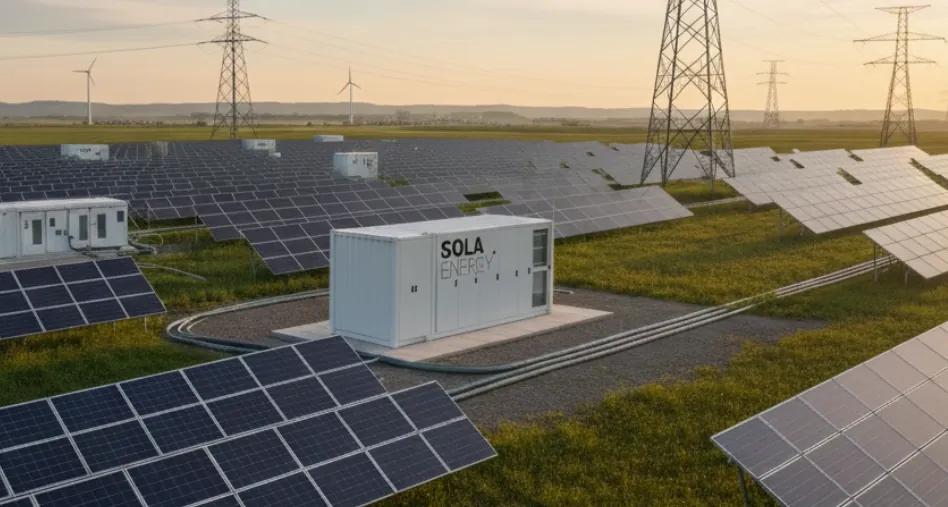
The Smart Energy Systems concept combines electricity, heat, gas and transport into one flexible system. What it means for Ukrainian businesses and where energy storage fits in.
Read →
What grid forming is, how it differs from grid following and why it matters for sites with their own generation and backup power.
Read →
Shifting consumption in time, shaving peak loads and using more of your own solar: how a battery works for the economics of a business.
Read →Leave your contacts, load and objective. We will refine the configuration and prepare a proposal.
Before the proposal we do: