
Grid forming: how an energy storage system creates the grid itself
What grid forming is, how it differs from grid following and why it matters for sites with their own generation and backup power.
Read →The Smart Energy Systems concept combines electricity, heat, gas and transport into one flexible system. What it means for Ukrainian businesses and where energy storage fits in.
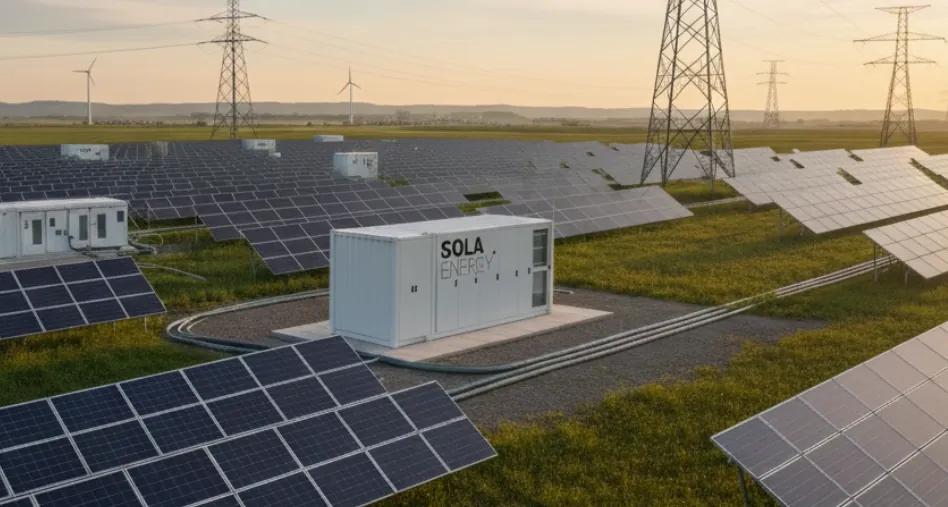
Ukraine’s power system operates under conditions no other European country has faced. Attacks have damaged most thermal power plants, part of the hydro generation and key grid facilities. The centralised model, where energy flows from a few large plants to millions of consumers, has proved too vulnerable.
At the same time, Ukraine follows the European Green Deal and its goal of climate neutrality by 2050. The power system therefore needs not just to be restored but rebuilt on modern principles.
Electricity, heat, gas and transport are still mostly planned separately. Smart grids are developed only within the power sector, zero-energy buildings only within construction, and solar and wind plants are built with no link to heating or gas networks.
Sun and wind are variable. Without energy storage, sector coupling and flexible demand, a power system cannot absorb a large share of renewables without the risk of imbalance. Most networks were also designed in the 20th century for large plants, not for thousands of distributed sources.
Smart Energy Systems (SES) is an approach in which energy sectors work as one system. Surplus electricity can be converted into heat (Power-to-Heat) or gas (Power-to-Gas), and flexibility is provided both within a day and between seasons. The building blocks are:
The loss of large thermal plants is already pushing the country towards distributed generation. The climate and load profile favour heat pumps and storage, and integration with the European grid requires modern standards of controllability and flexibility.
The path forward includes modernising and digitalising networks, regulatory incentives for flexibility, pilot SES cities following Denmark, Germany and the Netherlands, investment in storage from residential to industrial scale, and local generation.
Battery storage is the base layer of flexibility in an SES. At the level of a single site, the battery links the grid, on-site solar, generators and loads: it holds voltage and frequency during outages, shaves peaks and stores the daytime solar surplus. SOLA TITAN industrial systems with grid-forming capability and multi-source control are a practical building block of such a system for businesses and infrastructure.
Based on materials from: aesetua.com
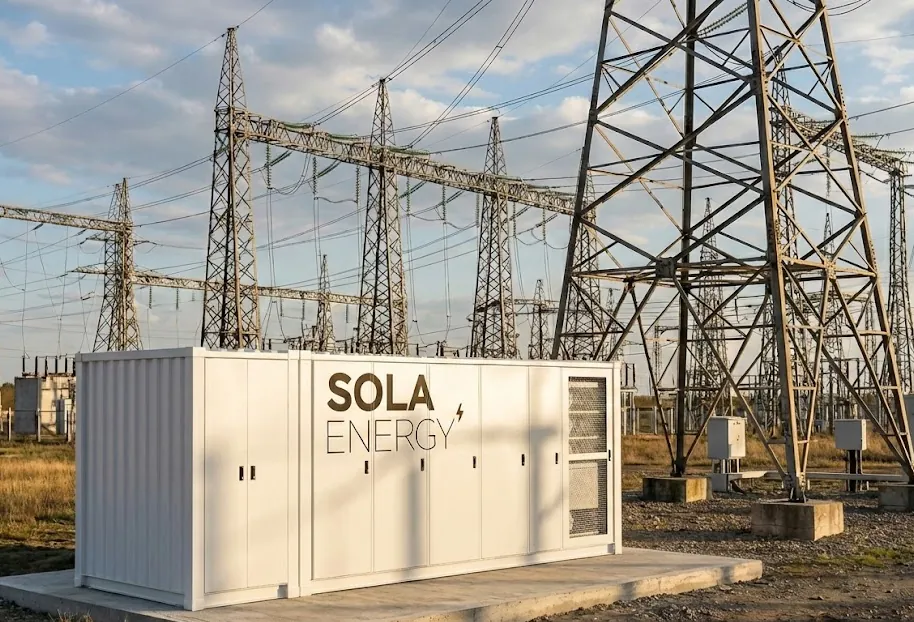
What grid forming is, how it differs from grid following and why it matters for sites with their own generation and backup power.
Read →
Shifting consumption in time, shaving peak loads and using more of your own solar: how a battery works for the economics of a business.
Read →
What power system inertia is, how VSM mode emulates a synchronous generator and where it is needed in practice: hospitals, sites with generators, remote facilities.
Read →Leave your contacts, load and objective. We will refine the configuration and prepare a proposal.
Before the proposal we do: