
Capacity and power
The number of battery modules and PCS rating match your load profile, for example a P-500 with 1044 or 2089 kWh.
Components from global manufacturers and SOLA’s own engineering in one system: conversion, control, cooling, fire protection and cybersecurity.
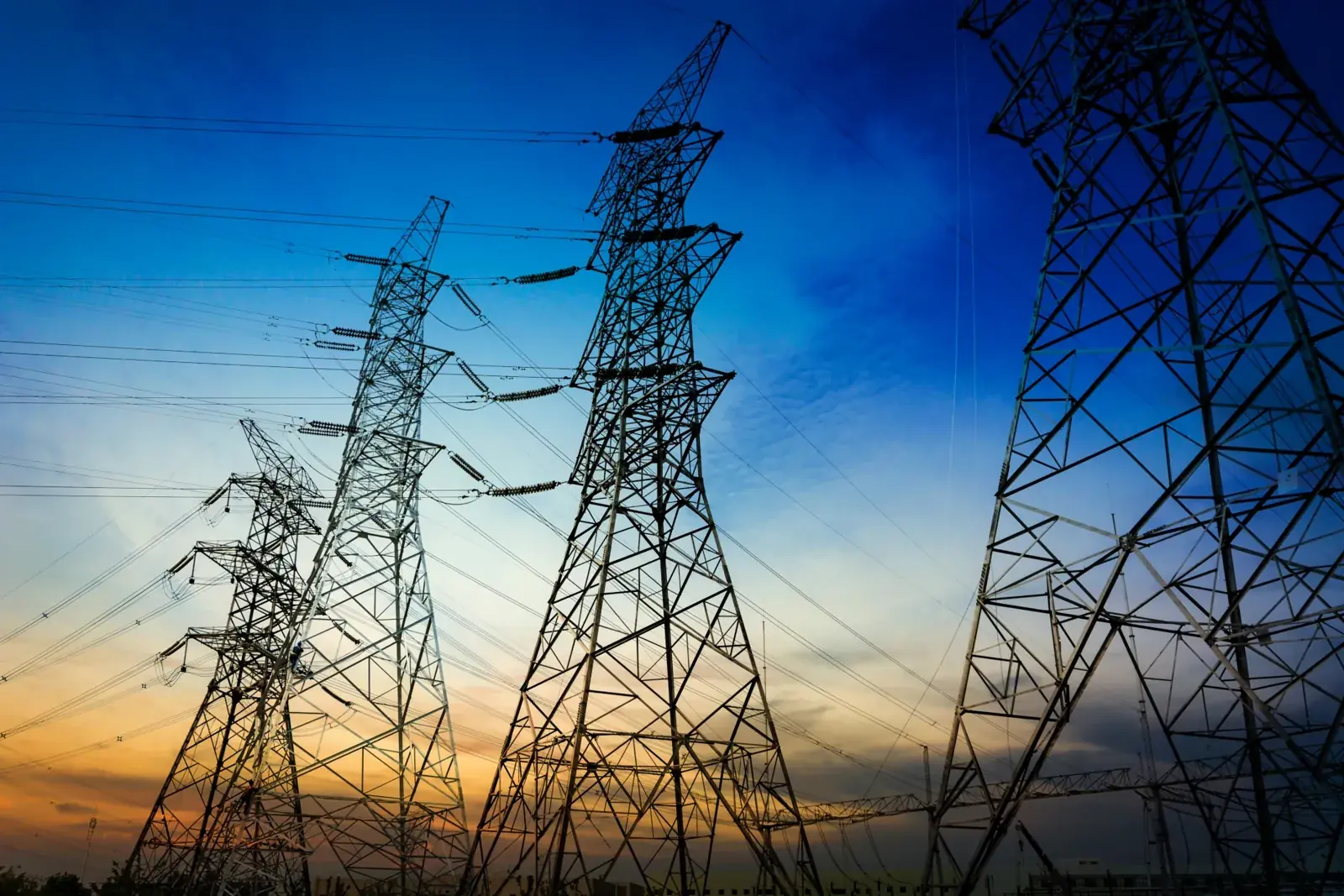
Most systems take 1–2 minutes to switch off and on, which for a factory means downtime and risk to equipment. SOLA TITAN runs in parallel with the grid: loss and return of voltage do not interrupt supply and staff do not need to switch anything. When the grid comes back, the system synchronises and smoothly returns to normal operation. The converter provides virtual synchronous machine mode and instant UPS mode.
Read: Virtual synchronous machine (VSM) mode: why a battery needs inertia →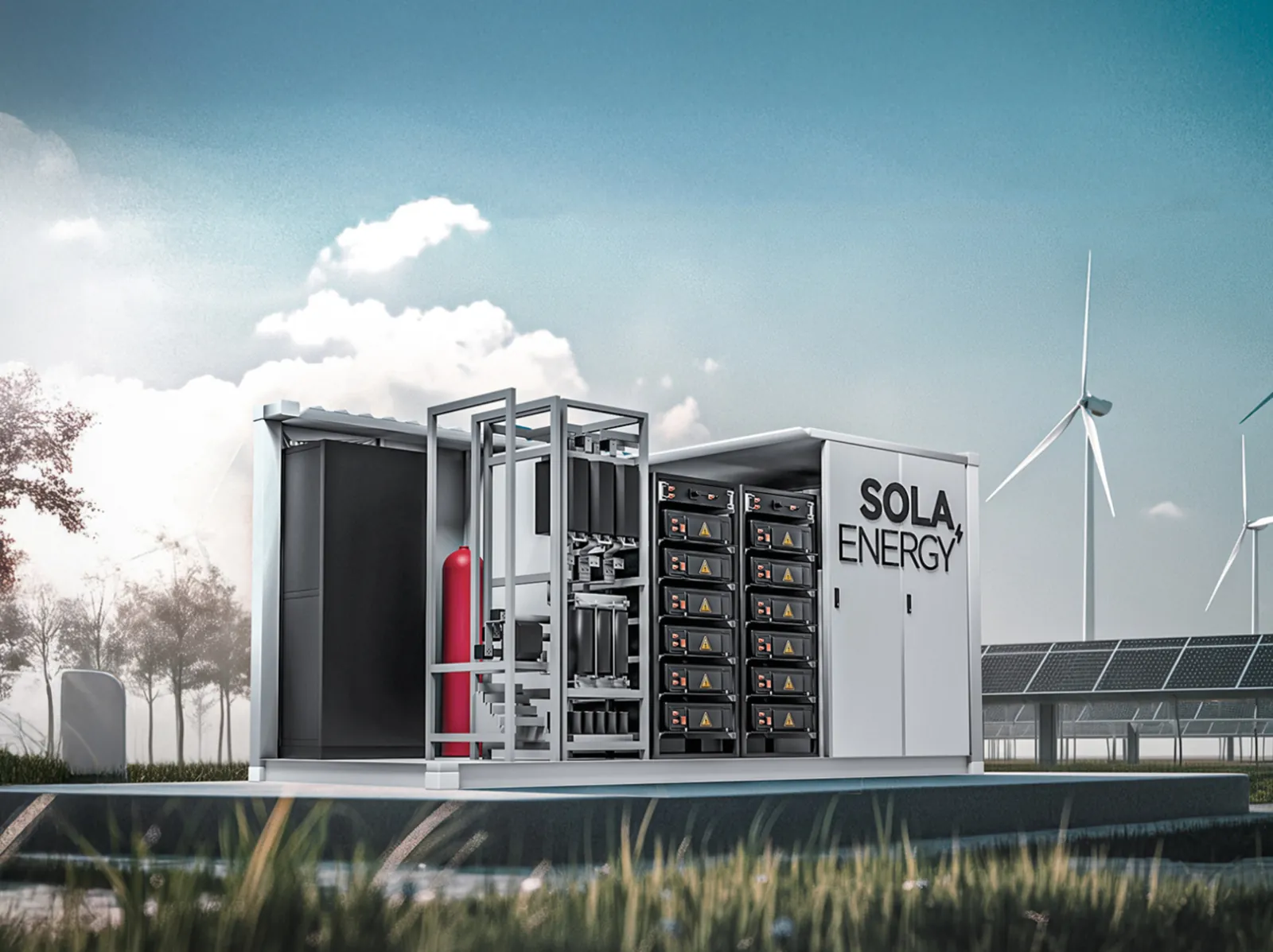
SOLA TITAN synchronises all sources (solar, wind turbines, gas and diesel generators and the grid) and controls prioritised loads from a single console. The EMS is based on Siemens SICAM, widely used to control power grids, and provides continuous monitoring and control of energy flows in line with cybersecurity standards.
Read: Grid forming: how an energy storage system creates the grid itself →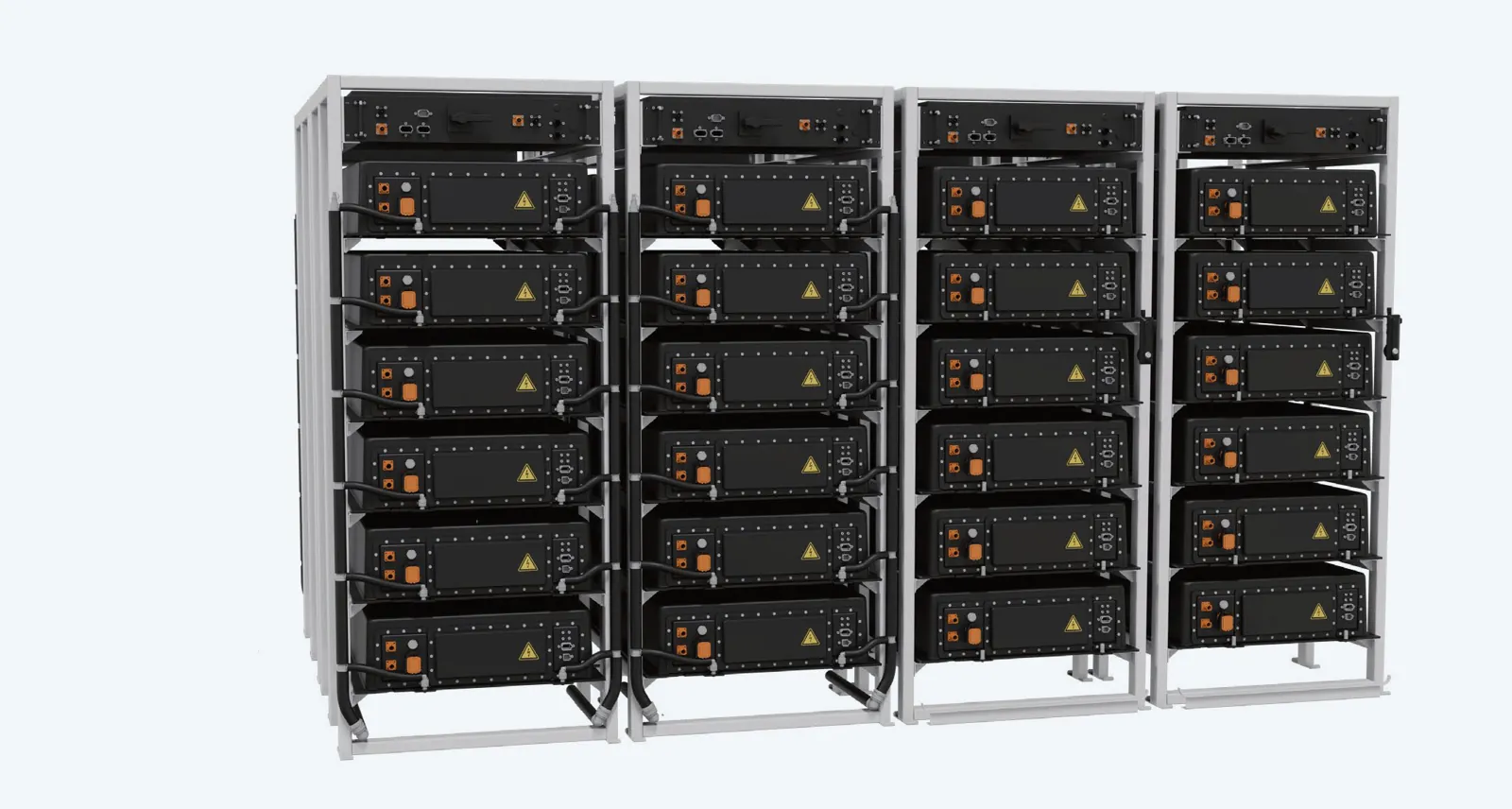
Each module holds 52 LFP cells made by Hithium, the only component of the system made in China. The module is sealed, has its own fire suppression and is held at +25 ± 2 °C. The module BMS balances the cells and the central BMS balances the modules. Five modules form a 261 kWh rack, and racks connect to the PCS through power modules with DC protection.
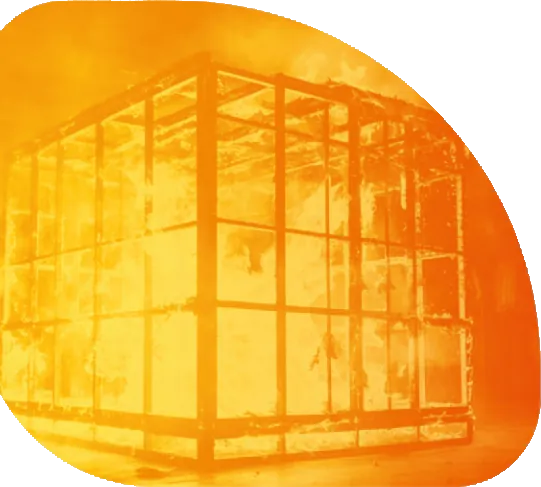
Stage I is a local aerosol system in every sealed module: it suppresses a fire inside the module and immediately signals the central system. Stage II is a central system with smoke, heat and lithium vapour sensors. If readings exceed the limits, the container is flooded with nitrogen and oxygen drops to 10% or less, so fire cannot spread to other modules. Equipment stays clean and only the damaged element is replaced. According to the manufacturer, it is the only system of its class in Europe certified by VdS (an independent German testing institute), which lowers insurance costs. In the P-100 both stages use aerosol.
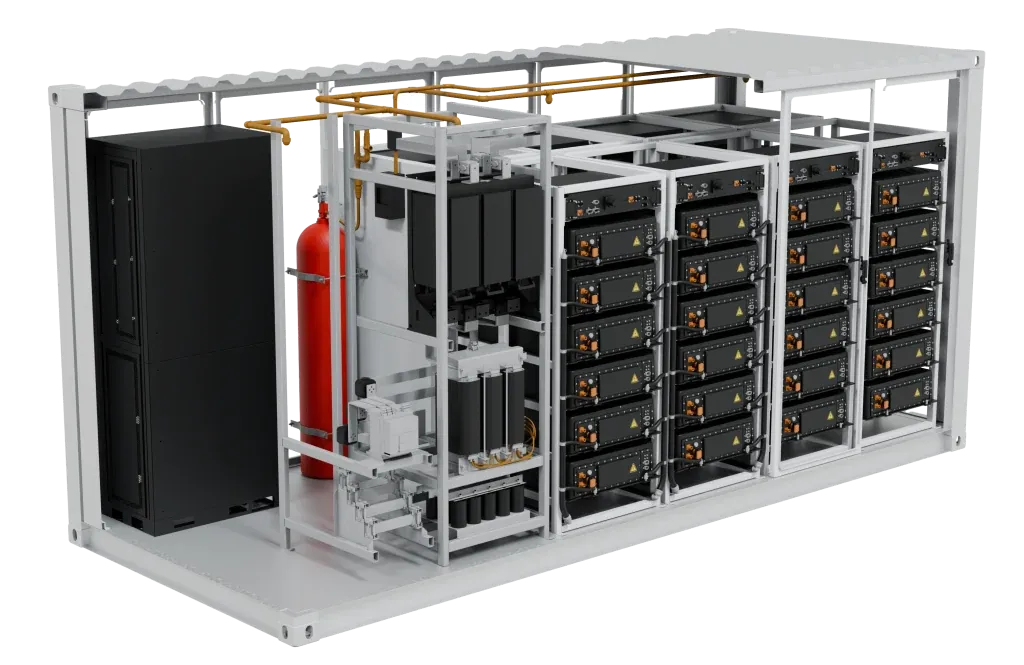
A propylene glycol loop cools and heats the batteries and PCS converters, holding them at 24–26 °C regardless of season and whether the system is running. This prevents premature cell degradation. Batteries and PCS operate in a sealed, dust-free environment and need no regular maintenance. Manufacturer warranty: 10 years or 8,000 cycles.
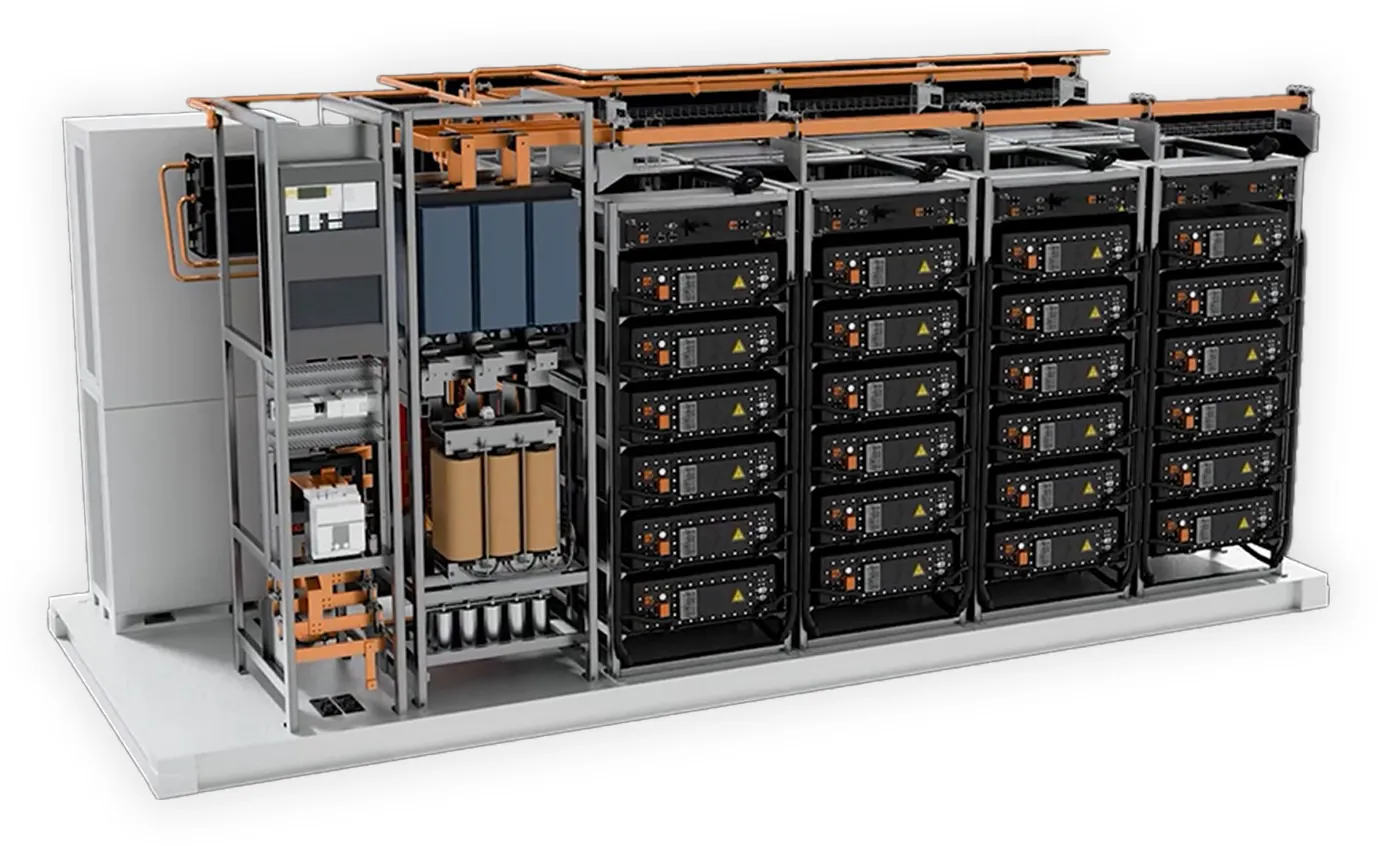
The Danfoss (Vacon, Finland) converter transfers energy between the AC grid and the batteries and controls the flow dynamically. Low harmonic distortion (THDi ≤ 3%) and an extra LC filter reduce electromagnetic interference. Double conversion lets the system supply loads and work with the grid at the same time. Overload: 200% for 2 s, 150% for 30 s, 120% for 600 s.
Read: PCS double conversion: storage as an active part of a site’s power system →
The converter input and output voltage is 690 V (3-phase). To work with a 400 V grid, a Δ/Y 690 V / 400 V (3-phase + PEN) isolation transformer compliant with EN 60076-11 is used. We select the transformer, its enclosure, protection and connection scheme as part of the project.
For a large solar farm, an extra controller presents hundreds of inverters to the EMS as one farm. An extra DLM controller allows up to 160 charging stations.
When the grid fails, the EMS takes over energy flows. The microgrid runs both as part of the wider grid and autonomously, with instant switching between modes, and resynchronises smoothly when supply returns.
SOLA is the manufacturer, so the system can be tailored to the customer’s needs.
The number of battery modules and PCS rating match your load profile, for example a P-500 with 1044 or 2089 kWh.
Anti-corrosion coatings for chemical plants and additional options for hazardous (Ex) areas.
Upgrade to SCADA Advance: day-ahead market, FCR, generation and load control, integration with your infrastructure via IEC / DNP3.
IEC 104 provides remote control and integration with operator systems and SCADA. IEC 61850 covers intelligent energy management and automation. Modbus, Profibus, Profinet, DNP3 and OCPP are also supported.
The EMS hardware and software are developed in the EU and exchange data only with servers located in the EU. A hardware crypto chip, IEC 62443 certification and a module that protects against software tampering.
Ukraine is part of the ENTSO-E grid, so cybersecurity requirements for its energy sector match Europe’s. According to the manufacturer, SOLA TITAN meets the NIS2 directive.
Read →Leave your contacts, load and objective. We will refine the configuration and prepare a proposal.
Before the proposal we do: